Global Central Banks Take More Aggressive Stance Than the Federal Reserve, Dollar Faces Challenges
Central banks worldwide are adopting more aggressive monetary policies compared to the Federal Reserve, impacting the US dollar. Recent data suggests US economic growth is slowing, while other nations tighten policies. Technical analysis indicates potential for the dollar to strengthen if key resistance levels are breached, with regional currencies showing varied performance. The market remains attentive to upcoming inflation data which could sway monetary decisions further.
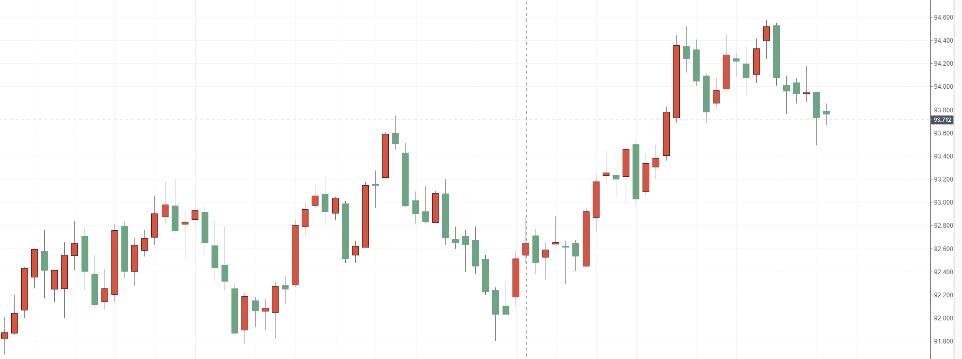
Recently, the dollar index futures declined after reaching a peak near September 2020 levels, experiencing five days of consecutive drops. It fell from 94.57 to 93.49, a 1.14% decline, ending at 93.72 on Tuesday.
Compared to the Fed, which signals possible asset reduction starting in November, many other central banks are expected to hike interest rates more rapidly. Markets predict a 25 basis point increase for the Fed by September next year, while countries like New Zealand, Canada, and the UK are anticipated to implement multiple rate hikes in the near term.
Countries such as New Zealand, Australia, Canada, and the UK are already tightening monetary policies, unlike the Eurozone and Japan, which maintain easing. This suggests the US may be lagging behind in monetary tightening, potentially weakening the dollar further.
Tonight’s UK and Canadian CPI data could influence their monetary strategies—rising inflation may strengthen their currencies.
Meanwhile, US economic indicators hint at slowdown. September housing starts and permits fell sharply, indicating a slowdown in economic growth. Factory output also declined, marking the worst performance in months.
The Atlanta Fed estimates Q3 GDP growth at just 1.2%, down significantly from Q2’s 6.7%. Major banks like Goldman Sachs have lowered their US growth forecasts, impacting the dollar’s strength overall.
The varied responses to the pandemic and inflation trends highlight different economic trajectories worldwide. Technically, the US dollar shows potential to strengthen if it breaks above key levels, while currencies like the Australian dollar are rallying amid positive technicals. The yen, on the other hand, continues to weaken, and the euro’s short-term rebound masks its overall weakness.