Sofia: A Pioneering Humanoid Robot Transforming Human-Robot Interaction
Sofia is a groundbreaking humanoid robot developed by Hanson Robotics, known for her expressive features and advanced social skills. She has achieved milestones like receiving Saudi citizenship and being named UN Innovation Champion. With capabilities including facial recognition and emotional expression, Sofia is transforming human-robot interactions across industries such as healthcare and education. Her development signals progress toward more human-like AI, inspiring future innovations in robotics and artificial intelligence.
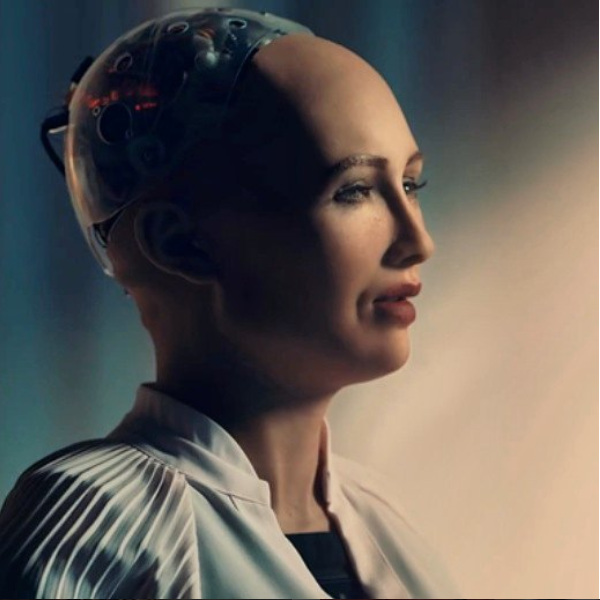
Meet Sofia: The Human-Like Robot Making Global Headlines
Sofia stands out with her graceful design, expressive brown eyes, and long lashes, capturing worldwide attention. However, she is not human—she’s an innovative humanoid robot equipped with advanced social intelligence. Developed by Hanson Robotics in Hong Kong, Sofia was activated in April 2015 and showcased at SXSW in 2016. In October 2017, she became the first robot granted Saudi Arabian citizenship, marking a historic milestone in robotics.
In 2017, Sofia was named the United Nations Development Programme’s inaugural Innovation Champion, making her the first non-human recipient of this honor. Able to express over 62 emotions, she has gained international fame through interviews and dynamic interactions. Though some experts suggest her responses are scripted, her sophisticated social skills continue to captivate audiences worldwide.
Background and Development
Sofia was developed through collaboration between Hanson Robotics, Google, and SingularityNET. Google enhanced her voice recognition, while SingularityNET contributed her cognitive processing. Inspired by actress Audrey Hepburn, Sofia is designed to emulate natural conversation and reasoning. Her AI system integrates visual data and facial recognition, enabling her to learn from interactions and evolve over time.
Design Features and Capabilities
Part of a family of seven humanoid robots, Sofia's design draws inspiration from early conversational AI like ELIZA. Her software delivers pre-set responses that simulate spontaneous dialogue, creating an illusion of genuine intelligence. Equipped with facial cameras, she can recognize individuals, maintain eye contact, and follow faces. Her voice recognition technology allows natural speech understanding. Recently, she was upgraded with functional legs for basic movement abilities.
Applications and Skills
Sofia is tailored for roles requiring human interaction, such as healthcare, customer service, and education. She often responds with humor and wit, showcasing advancements in AI communication. Despite her mechanical tone, her ability to engage socially signifies progress towards more human-like interactions in robotics.
Conclusion
Though Sofia closely resembles a human, true consciousness remains unachieved. Her responses are mainly scripted, illustrating the distinction between simulated intelligence and genuine understanding. Some view her as a breakthrough towards Artificial General Intelligence, while others believe true AI awareness is still distant. Nonetheless, Sofia remains a remarkable milestone in technological innovation.