Essential Facts About GPS Technology and Its Impact
Discover the fascinating world of GPS technology, including its satellite networks, accuracy factors, and diverse applications. Learn how GPS has become a cornerstone for navigation, timing, and tracking services globally, underpinning multiple industries and daily life activities.
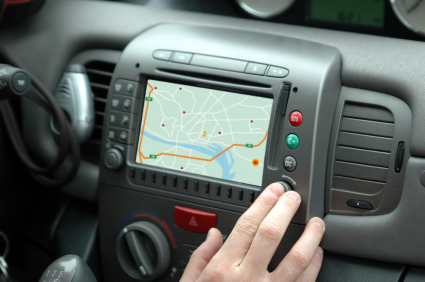
Essential Facts About GPS Technology and Its Impact
Important insights into GPS technology
Global Positioning System (GPS) is crucial for modern navigation and location services used every day. Originally created for accurate satellite-based positioning, GPS now supports various industries beyond travel, including logistics and emergency services.
Many users are unaware of the complex workings behind GPS. Here are some interesting facts about this three-decade-old system that continues to evolve and serve global needs.
Other satellite navigation networks: Besides GPS, systems like Russia's GLONASS, Europe's Galileo, and China's BeiDou provide satellite navigation worldwide. Currently, GPS and GLONASS are the only systems delivering full global coverage, while Galileo and BeiDou are still expanding their reach.
This network relies on 32 orbiting satellites. To maintain uninterrupted global coverage, a minimum of 24 satellites is essential; additional satellites improve coverage and system stability, especially during maintenance windows.
GPS accuracy depends on signals from at least four satellites, employing a line-of-sight method to pinpoint locations precisely. These signals travel at the speed of light, enabling accurate distance calculations based on signal travel time and satellite data.
Relativity plays a role in GPS accuracy: time measures slightly faster on satellites due to weaker gravity. Without adjusting for this tiny time difference—about 38 microseconds daily—location data could be off by miles. This highlights the importance of multiple satellites and relativistic corrections.
Originally developed for military use, GPS became fully accessible to civilians after 2000. Managed by government agencies, it is now a vital public resource for navigation, timing, and tracking worldwide.
Potential uses of GPS include:
Providing precise timing via onboard atomic clocks
Tracking health monitoring devices for Alzheimer's patients
Improving maritime and aerial safety through enhanced navigation systems