A Guide to the Three Most Popular Electric Guitar Styles
This comprehensive guide explores the three main types of electric guitars: hollow body, semi-hollow body, and solid body. It highlights their unique features, ideal genres, and suitability for different players. Understanding these distinctions helps musicians choose the best guitar for their sound and style, from warm acoustic tones to powerful rock sounds. Perfect for learners and seasoned players alike, it offers insight into the characteristics that define each guitar type, aiding in making informed musical choices.
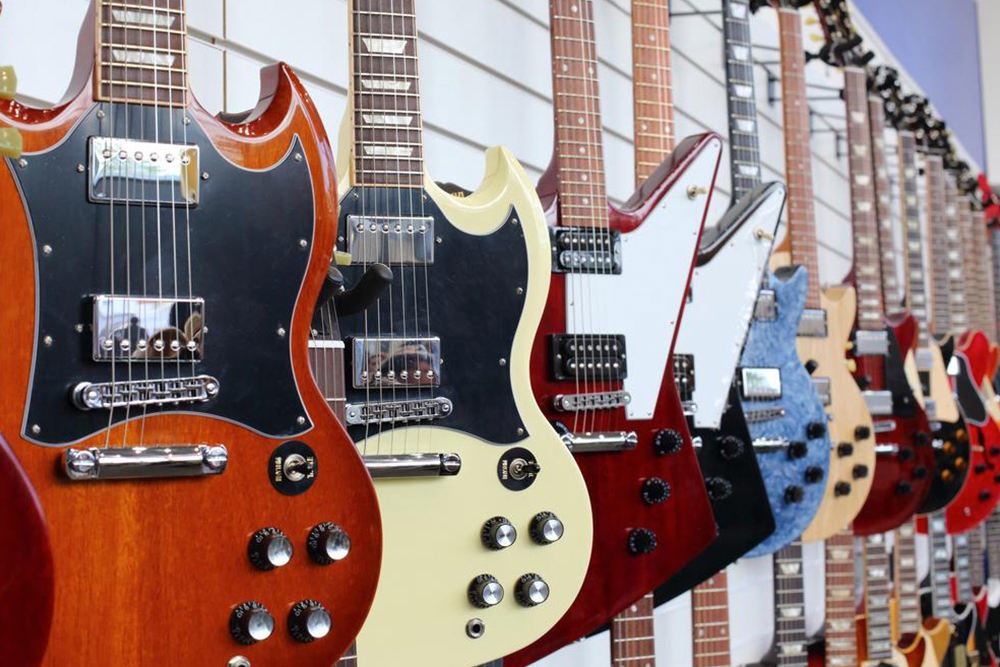
Exploring the Main Categories of Electric Guitars
Electric guitar design evolved in the early 1900s to enhance sound projection during performances. These instruments vary widely, shaped by differences in pickups, bridges, fret sizes, neck radii, material choices, and tuning systems, each producing distinct tones. While beginners might find these variations confusing, experienced players recognize the subtle differences. Here's an overview of the three primary electric guitar types.
Hollow body guitars
Originating in the 1930s, these guitars feature a fully resonant hollow body that amplifies sound naturally.
Combining acoustic warmth with electric amplification, hollow body guitars have sound chambers and pickups. Unlike purely acoustic-electric models, these are primarily electric, delivering warm, clear tones perfect for genres like pop, folk, and blues.
Semi-hollow body guitars
Introduced by Gibson in 1958, these instruments feature a solid center block that reduces weight and increases versatility.
With double-cutaway designs and thinner bodies creating hollow wings, semi-hollow guitars produce rich harmonic sound. They’re popular among jazz and country artists, designed to cut through noisy environments. Their light weight offers comfort during extended play.
Solid body guitars
Made without resonant chambers, these guitars rely on pickups to transmit vibrations directly, resulting in a wide range of sounds. They are highly adaptable and form the backbone of genres like heavy metal, rock, blues, and country. Common woods include ash, alder, mahogany, or maple, making them sturdy and flexible. Usually, ash or alder bodies are used for these guitars.
Each type provides unique features that suit different playing styles and musical styles. While beginners might not notice every nuance, playing around with these variations helps find the ideal instrument to match your musical style!