Importance of Weather Radar Systems in Precise Weather Prediction
Weather radars are crucial for modern meteorology, helping track and analyze precipitation types and movement. Utilizing pulse-Doppler technology, they enable accurate short-term weather forecasting by providing detailed storm data. Developed during WWII, radar technology has evolved and become essential for meteorologists, research, and media. Understanding radar signals and resolution helps improve forecast precision, supporting disaster preparedness and daily weather updates.
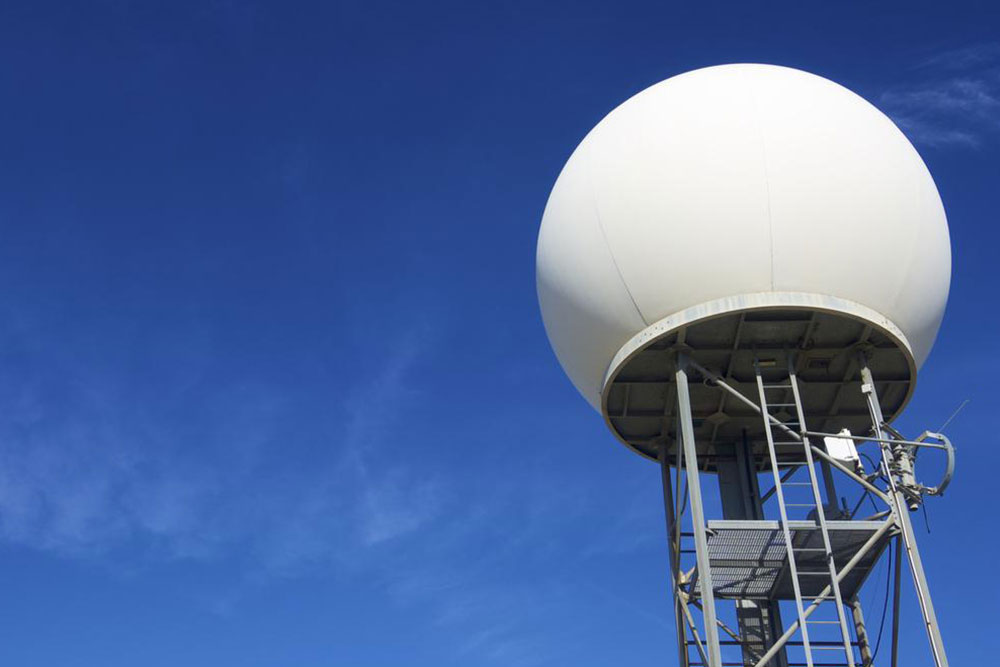
Exploring Weather Radars and Their Role in Meteorology
Weather radar systems, including Doppler and surveillance radars, are vital instruments for detecting precipitation, tracking its movement, and determining its type—such as rain, snow, or hail. Advanced radars predominantly use pulse-Doppler technology to analyze the motion of raindrops and measure rainfall intensity. This information enables meteorologists to study storm structures and predict severe weather events more accurately.
Initially developed during World War II, radar technology was adapted for meteorological purposes after operators noticed weather-induced echoes clouding targets. Today, weather radars are used by meteorological agencies, research institutes, and media organizations to provide real-time data on precipitation dynamics, improving short-term weather forecasts.
These radars emit microwave pulses via directional antennas, employing devices like magnetrons or klystrons. With wavelengths around 10 centimeters, they effectively detect water droplets and ice particles. Different frequency bands facilitate various observations—from broad scans to detailed studies of fog, drizzle, and other phenomena.
As radar signals propagate, their coverage area increases, which influences resolution at longer distances. For example, beyond 150 km, a single pulse covers roughly a cubic kilometer. Understanding these technical aspects helps meteorologists interpret radar data for better forecasting accuracy.
Disclaimer: Our blog offers comprehensive, well-researched information across multiple topics. While we aim for accuracy, some details may vary across sources. We do not guarantee the completeness or timeliness of this data and are not liable for discrepancies or missed opportunities.