Solar Panel Installation in the UK: Essential Guide Before Going Solar
Discover how solar panels work, types, installation steps, costs, and benefits. A complete guide for UK homeowners considering solar energy.
Why Choose Solar Energy in the UK?
Solar energy is becoming an increasingly popular choice for UK homeowners looking to reduce electricity bills and lower their carbon footprint. With advances in technology and supportive government incentives, installing solar panels is more accessible than ever. This guide covers everything you need to know before going solar.
How Solar Panels Work
Solar panels, or photovoltaic (PV) panels, use silicon cells to convert sunlight into direct current (DC) electricity. An inverter then transforms DC into alternating current (AC) for household use. The process relies on the photovoltaic effect, where sunlight photons knock electrons loose, creating an electric flow. Even on cloudy days, panels generate electricity through diffuse light, though at reduced efficiency.
Types of Solar Panels
Choosing the right panel type depends on your budget, roof space, and energy needs. Here are the main options:
Monocrystalline – High efficiency (15–20%), sleek black appearance, premium cost. Ideal for limited roof space.
Polycrystalline – Moderate efficiency (13–16%), lower cost, blue hue. Good balance of performance and affordability.
Thin-Film – Low efficiency (7–13%), flexible, lightweight. Suitable for curved roofs or building-integrated photovoltaics (BIPV).
Bifacial – Dual-sided capture boosts output by up to 20% (efficiency 16–22%). Works well on reflective surfaces like snow or sand.
Perovskite – Emerging technology with high efficiency (20–30%) and low production cost. Still experimental but promising for future installations.
| Type | Efficiency Range | Cost | Durability | Key Features |
|---|---|---|---|---|
| Monocrystalline | 15%–20% | High | High | High efficiency, sleek appearance |
| Polycrystalline | 13%–16% | Moderate | Moderate | Affordable, good performance-to-cost ratio |
| Thin-Film | 7%–13% | Low | Varies | Flexible, lightweight, BIPV |
| Bifacial | 16%–22% | Moderate-High | High | Dual-sided, higher energy production |
| Perovskite | 20%–30% | Low-Moderate | Low-Moderate | High efficiency, experimental |
Source: EnergySage
Solar Panel Installation Process
Site Assessment and Permits
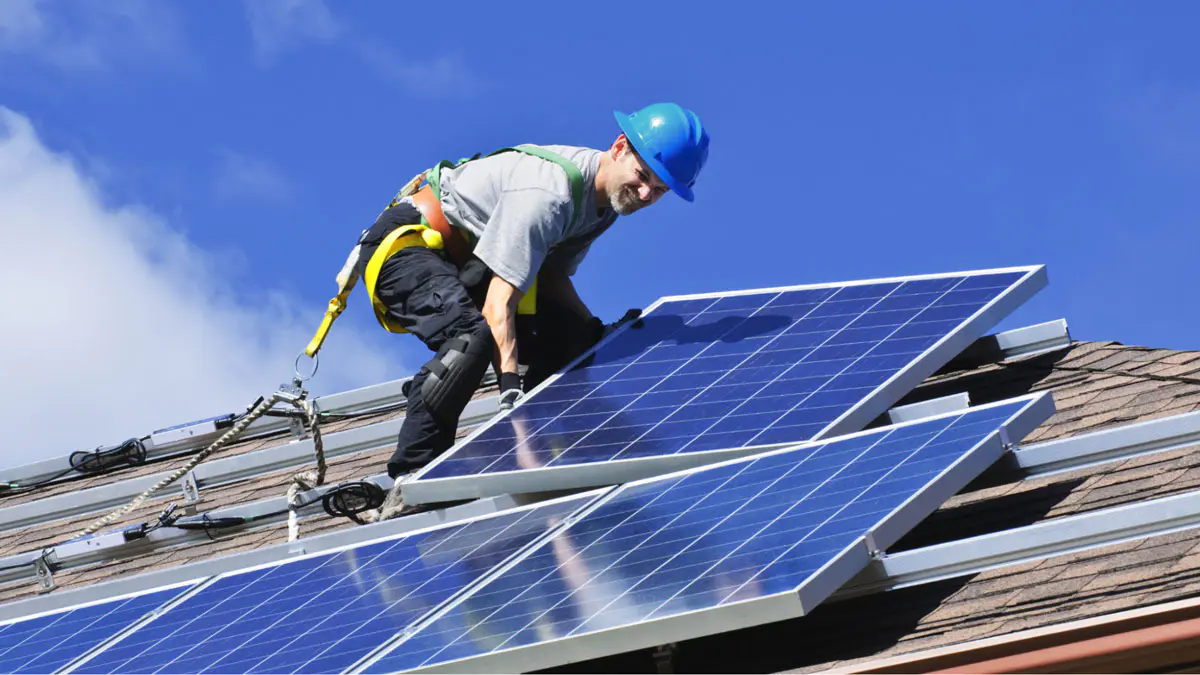
A professional installer evaluates your roof’s orientation, shading, and structural integrity. South-facing roofs with minimal shade are ideal. Permits and compliance with local building codes are required before installation.
Installation Steps
Mounting System: Racks or brackets are attached to the roof or ground to support panels securely.
Panel Placement: Panels are fastened using bolts or clamps, with proper spacing for optimal performance.
Electrical Wiring: Using MC4 connectors, panels are wired in series or parallel as per voltage requirements.
Inverter Connection: The inverter (typically near the main panel) converts DC to AC. Efficiency and compatibility matter.
Testing: The system is checked for proper voltage, current, and inverter function before commissioning.
Benefits of Solar Energy
Environmental Impact
Solar energy produces no air or water pollutants, reducing greenhouse gas emissions and reliance on fossil fuels. It’s a clean, sustainable choice.
Economic Advantages
Lower Electricity Bills: Generate free power from the sun, cutting monthly costs significantly.
Tax Credits and Incentives: The UK offers schemes like the Smart Export Guarantee (SEG) and reduced VAT on installations. In the US, a federal tax credit deducts 26% of system cost.
Increased Property Value: Homes with solar panels often sell for a premium (research suggests ~$15,000 in the US; UK trends are similar).
Inspirational Quotes
“The sun shines not on us but in us.” – John Muir
“Solar energy is the future. There is no doubt about it.” – Elon Musk
Common Concerns Addressed
Lifespan
Most panels carry 20–25 year warranties but can last 30–40 years with gradual efficiency decline.
Cloudy Days
Panels still generate electricity from diffuse light. Battery storage can store excess for later use.
Maintenance
Minimal – occasional cleaning and inspection of wiring, mounts, and inverter suffice.
Weather Durability
Panels are tested against high winds, hail, and snow. Secure mounting is key.
Roof Compatibility
Most roof types (asphalt, metal, tile, flat) can accommodate panels; a professional assessment confirms feasibility.
Financing Options
Purchase vs Lease
Buying gives full ownership and tax benefits but requires upfront capital. Leasing has lower initial costs but limited savings long-term.
Government Incentives
UK homeowners can benefit from the Smart Export Guarantee (SEG) and reduced VAT. In the US, the federal tax credit is available.
Solar Loans
Specialized loans with competitive rates help spread the cost without large upfront payment.
Power Purchase Agreements (PPAs)
A third party installs panels and sells you the electricity at a fixed rate. No upfront cost.
Community Solar
Subscribe to a shared solar farm if your roof is unsuitable. Receive credits on your bill.
Conclusion
Solar panels offer a reliable pathway to energy independence, cost savings, and environmental stewardship. With proper planning, professional installation, and the right financing, UK homeowners can harness the sun’s power for decades. The solar industry continues to innovate, making this an opportune time to invest in a sustainable future.