Remarkable 32,000-Year-Old Woolly Rhino Discovered in Siberian Permafrost with Fatty Hump and Blade Horn
Scientists uncover a 32,000-year-old woolly rhino with a fatty hump and blade-like horn, offering new insights into Ice Age adaptations.
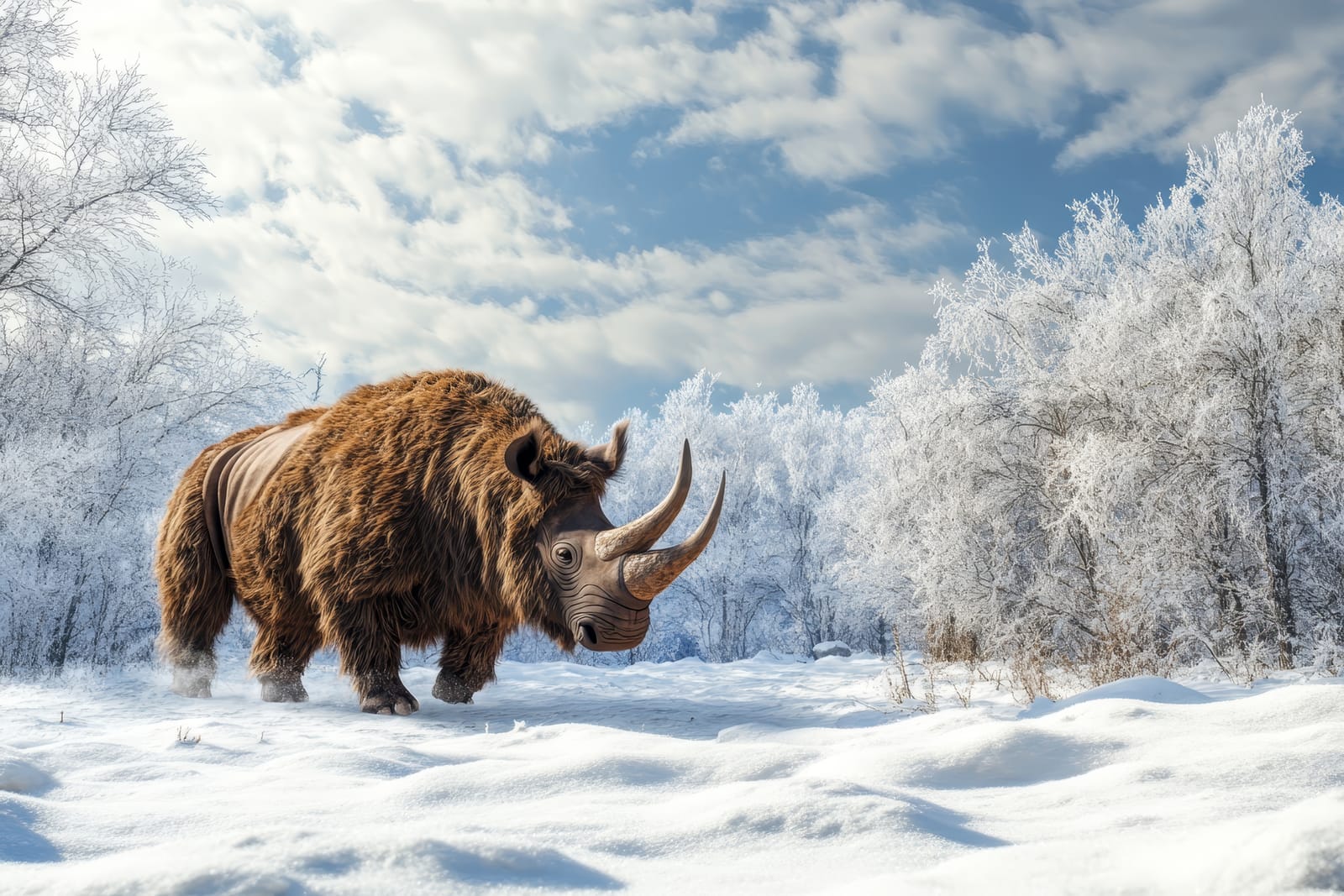
Discovery of a Frozen Ice Age Rhino
In August 2020, a team of Russian scientists from Yakutsk and Moscow uncovered an exceptionally preserved woolly rhino on the banks of the Tirekhtyakh River in Siberia. The specimen, estimated to be about 32,000 years old and around four years of age at death, has become one of the most complete Ice Age rhinos ever found.
Distinctive Physical Adaptations
Fatty Hump for Winter Survival
One of the most striking features is a large fatty hump on the rhino's back. Similar to modern Arctic animals, this hump stored energy that could be converted into heat without shivering, crucial for surviving the brutal Ice Age winters.
Blade-Shaped Horn
Unlike modern rhinos, this woolly rhino possessed two horns, with the front horn being large and blade-shaped. This adaptation likely helped it dig for food or fend off predators in the frozen landscape.
Preservation and Analysis
The rhino's right side was remarkably well-preserved, with soft tissues including fur, skin, and even the fatty hump intact. Its left side showed significant damage, probably from scavengers. Scientists temporarily defrosted the specimen to collect samples. While most intestines were missing, internal organs were partially exposed, offering valuable data.
Fur Color and Age
The preserved fur was light brown with a softer underlayer. Comparison with other specimens revealed that younger woolly rhinos had much lighter, almost blonde hair that darkened and coarsened with maturity.
Scientific Significance
Well-preserved soft tissues allow genetic testing that bones alone cannot provide. This opens doors to understanding the genetic makeup, health, and adaptation strategies of extinct species. The study was published in Doklady Earth Sciences.
Ongoing Discoveries in Siberia
Local populations often tunnel into permafrost in search of mammoth tusks. Under agreements with authorities, they must report significant finds to paleontologists. This ensures a steady flow of specimens like this woolly rhino, continuing to shape our knowledge of Ice Age life.