Exploring the Cosmos: Space Telescopes, Mars Missions, and the Hunt for New Worlds
Space telescopes reveal ancient galaxies and exoplanet atmospheres while Mars missions and lunar bases pave the way for human exploration. Discover the latest cosmic insights.
Introduction
Space exploration has entered a transformative era, with telescopes and probes reshaping our view of the universe. From capturing light from the dawn of time to analyzing distant worlds, these technologies are unlocking secrets that were once beyond reach. This article explores the key frontiers: space telescopes, Mars missions, lunar exploration, and the search for exoplanets.
Space Telescopes: Windows to the Early Universe
Peering Back in Time
Space telescopes observe cosmic events as they happened billions of years ago, acting as time machines. By detecting light from ancient galaxies, scientists study conditions shortly after the Big Bang. These observations refine models of cosmic evolution and reveal how the first stars and galaxies formed, adding chapters to our story of cosmic origins.
Atmospheres of Exoplanets
Thousands of exoplanets have been confirmed, and space telescopes are now analyzing their atmospheres. By capturing light passing through or emitted by these atmospheres, researchers identify molecules like water vapor and methane. This ability is crucial for assessing habitability and has produced 3D atmospheric maps of distant worlds, narrowing down candidates for life beyond Earth.
The Hunt for Dark Matter
Space telescopes also explore invisible components like dark matter. Although it does not emit or absorb light, its gravitational effects on galaxies reveal its presence. Observatories detect high-energy gamma rays that may originate from dark matter interactions, potentially providing the first direct evidence of this elusive substance and transforming our understanding of the universe's composition.
Mars: The Red Planet Frontier
Decoding the Martian Atmosphere
Mars missions aim to understand how a once potentially habitable planet became a desolate world. By analyzing the thin atmosphere and its interaction with solar wind, missions map atmospheric behaviors and reveal details about past climate and atmospheric escape over billions of years.
Smarter Robotic Explorers
Advanced rovers now feature autonomous capabilities, allowing them to analyze terrain, navigate obstacles, and conduct scientific investigations independently. This maximizes scientific return and enhances safety, enabling rovers to venture into more promising areas of Mars's complex landscape.
Charting the Course for Human Exploration
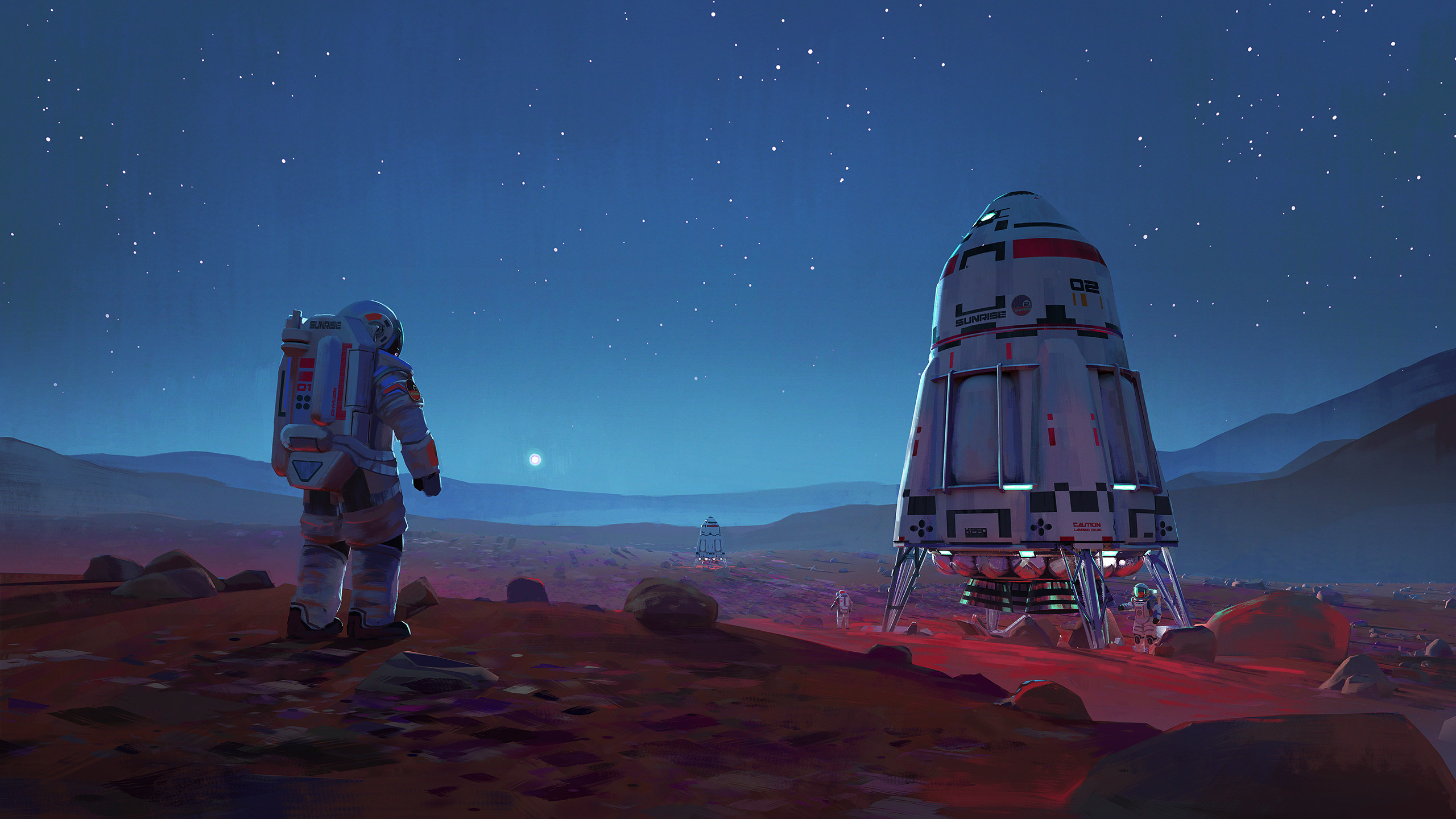
Public and private entities are working toward sending humans to Mars, with initial Moon missions serving as stepping stones. Reusable launch systems and interplanetary technologies are being developed to transport crews and materials sustainably, bringing human missions closer to reality.
Lunar Exploration: Building a Sustainable Presence
Artemis and Beyond
The Artemis Program aims to establish a permanent lunar presence, including crewed landings at the south pole. Partnerships between space agencies and private companies emphasize reusable launch systems to reduce costs. Lunar bases will enable ongoing scientific research and serve as testbeds for deep space missions, particularly to Mars.
An Ecosystem of Innovation
Reusability is transforming spaceflight, with rapid-launch capabilities and in-orbit refueling reducing costs and enabling more frequent missions. Innovations in telemedicine, robotic precursors, and autonomous systems are accelerating humanity's steps toward a permanent off-Earth presence.
Exoplanets: Searching for New Earths
Detection Methods
Scientists use the transit method and radial velocity technique to detect exoplanets. By observing periodic dips in starlight or spectral shifts, they infer planet presence. These methods have revealed a staggering diversity of worlds, from hot Jupiters to rocky super-Earths.
A Universe of Unexpected Worlds
Exoplanet discoveries include massive gas giants in close orbits, rocky super-Earths, and planets in binary star systems. These findings challenge previous assumptions about planetary formation and survival, highlighting the resilience of planetary systems under complex gravitational forces.
From Detection to Characterization
Advanced spectroscopy allows characterization of exoplanet atmospheres, identifying conditions that might support life. Discoveries of atmospheres with essential molecules provide promising candidates for further study, driving the search for life beyond Earth.
Conclusion
Advancements in space telescopes, Mars missions, lunar exploration, and exoplanet research are closing the gap between dream and reality. Each discovery brings us closer to understanding our place in the cosmos and the potential for life elsewhere. The final frontier continues to inspire and challenge, pushing the boundaries of human knowledge.