5,000-Year-Old Farming Society in Morocco Rewrites North African Neolithic History
A 5,000-year-old farming society in Morocco reveals advanced agriculture, trade, and challenges past assumptions about North Africa's Neolithic era.
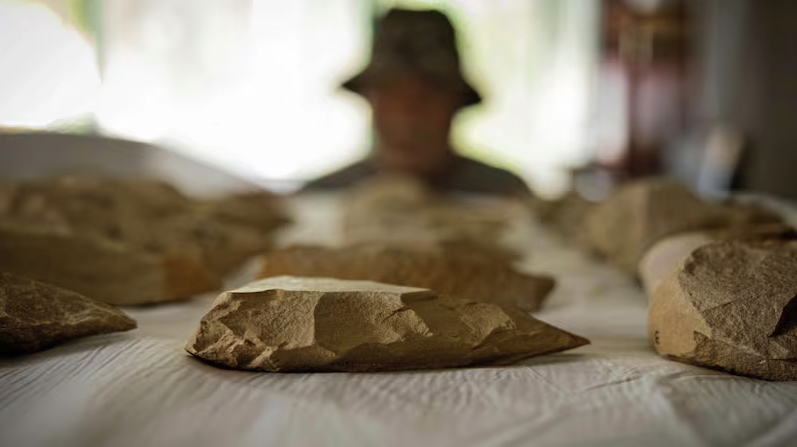
For nearly 90 years, the archaeological site of Oued Beht in Morocco remained largely ignored after its initial identification by French colonists in the 1930s. Moroccan archaeologist Youssef Bokbot, however, had a persistent intuition that the area held significant potential. Acting on that hunch, he launched a collaborative excavation that has now yielded a trove of Neolithic artifacts, published on July 31 in the journal Antiquity.
Dating the Ancient Society
Using radiocarbon dating on charcoal and seed samples, researchers determined the site was occupied between approximately 3400 and 2900 B.C., corresponding to the late Neolithic. The diversity of artifacts indicates a population with mixed genetic backgrounds. A 2023 study co-authored by Bokbot suggests that traditional pastoralists from the Sahara, along with people from the Iberian Peninsula and the Middle East, settled in this region. Cyprian Broodbank, an archaeologist at the University of Cambridge, noted, 'You really have Indigenous influxes all meeting in what we now realize is a melting pot.'
Agriculture and Trade Networks
The inhabitants were primarily farmers, cultivating barley, wheat, peas, olives, and pistachios on arid land. Large constructed pits contained seeds, supporting this agricultural activity. Remains of domesticated sheep, goats, pigs, and cattle indicate a mixed farming economy. The abundance of pottery and stone ax heads suggests the society was not only self-sufficient but also engaged in extensive trade. Giulio Lucarini, an archaeologist at the Institute of Heritage Sciences of Italy's National Research Council, described the 'insane quantity of pottery shards and polished axes' uncovered. Previous finds of ivory and ostrich eggs in Europe now have a likely source in North Africa, pointing to trade with the Iberian Peninsula, Egypt, and Mesopotamia.
Challenging Prevailing Assumptions
Before this discovery, archaeologists largely believed North Africa was dominated by hunter-gatherers and pastoralists who followed grazing lands. The Oued Beht findings overturn that view, revealing a stationary, farming-based society. 'Before this discovery there was nothing to say about farming in North Africa outside the Nile Valley,' Lucarini stated. Broodbank added, 'What we're doing here is not plonking down a single farming society into a pastoral world. We're actually showing that this part of the world has gone fully Neolithic, that this is part of the big world of farming. We've just found the tip of the iceberg.'
Implications for Future Research
The discovery opens new avenues for archaeological research in North Africa, challenging existing paradigms and encouraging re-evaluation of the region's role in early human history. Findings indicate North Africa was more integrated into the broader Neolithic world than previously thought, participating in extensive trade networks and adopting advanced agricultural practices. Future excavations aim to uncover more about daily life, social structures, and genetic diversity, potentially providing insights into migration patterns and cultural exchanges across the ancient Mediterranean.