How Tectonic Forces Shape Earth: Faults, Volcanoes, and Safety
Learn how tectonic plate movements cause earthquakes and volcanoes, and how modern technology monitors these forces to protect communities.
Earth's Restless Shape
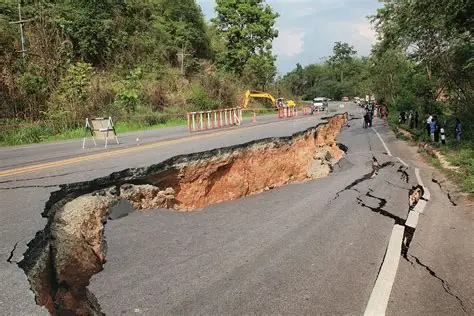
Beneath the ground, enormous slabs of rock called tectonic plates drift at a speed comparable to fingernail growth. Where they collide, mountain ranges rise; where they separate, molten rock creates new crust. When plates grind past each other along faults, stress builds and then releases as earthquakes. This constant motion powers the planet's most dramatic events—from volcanoes to seismic tremors—and understanding it is key to building safer communities.
How Plates Interact
Earth's lithosphere is divided into roughly a dozen major plates that float on the semi-fluid asthenosphere. Their interactions occur at three types of boundaries: convergent, divergent, and transform. At convergent boundaries, one plate dives beneath another in a process called subduction, melting into magma that feeds explosive volcanoes. Divergent boundaries, such as mid-ocean ridges, allow magma to rise and solidify, expanding the seafloor. Transform boundaries, like the San Andreas Fault, store immense friction that periodically ruptures in earthquakes. These zones are mapped by fault lines—fractures where blocks have moved past one another.
Modern Monitoring Tools
Today, scientists observe tectonic activity using a suite of technologies. Smartphone accelerometers, crowdsourced during quakes, produce real-time shaking maps. Airborne geophysical surveys scan subsurface geology, revealing hidden faults and rock layers. Satellites measure millimeter-level ground deformation via GPS and InSAR, tracking stress accumulation. Seismographs record seismic waves—P, S, and surface waves—allowing researchers to pinpoint epicenters and understand fault mechanics. These data streams feed models that improve hazard assessments and early warning systems.
Managing Volcanic and Seismic Risk
Volcanoes most often form along plate boundaries, especially above subduction zones where water lowers the melting point of rock. Monitoring gas emissions, ground swelling, and small tremors helps forecast eruptions. For earthquakes, scientists study precursor signals like changes in groundwater chemistry or foreshocks. Although exact prediction remains elusive, dense sensor networks and satellite data enhance probabilistic forecasting. This knowledge informs building codes that require flexible, reinforced structures in seismic zones, and guides evacuation plans for volcanic hazards.
Community Role in Preparedness
Engaging the public is crucial. Smartphone-based early warnings and citizen science initiatives turn millions of devices into a seismic network. School drills, public education about drop-cover-hold, and retrofitting older buildings reduce casualties. Shared international databases allow researchers to refine global risk models. By integrating geological understanding with technology and community action, people can live safely in dynamic landscapes shaped by the ever-moving crust.