Rovers, Rockets, and Revolution: How Modern Space Exploration Reshapes Our Cosmic View
From Martian rovers to icy moons and reusable rockets, explore how advances in space technology are transforming our understanding of the universe.
The New Space Age: A Feedback Loop of Discovery and Hardware
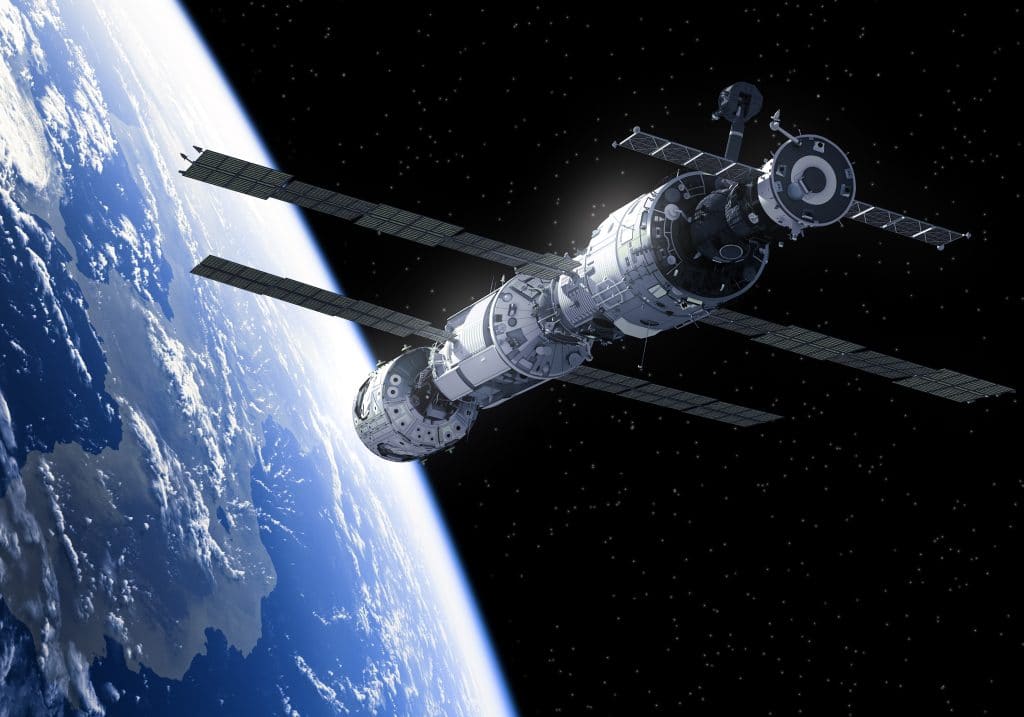
Space exploration has entered an era where each mission builds on the last, creating a continuous cycle of innovation. Stronger rockets carry bigger payloads; cheaper reusable boosters allow more frequent flights; and the data returned from every orbiter, rover, or telescope refines the priorities for the next generation of spacecraft. The result is a rapidly evolving map of the cosmos—one that turns distant planets into real landscapes, icy moons into potential habitats, and the night sky into a dynamic arena of unfolding events.
Mars: Landscapes and Time Capsules
Rovers as Field Geologists
Today's Mars rovers no longer simply snap pictures and drill at random. They scout ancient lake beds, dry river channels, and layered deltas, selecting the most promising outcrops for sampling. Fine-grained sediments are sealed inside protective tubes, preserving subtle chemical patterns and possible traces of past life. These cores are time capsules that future missions will retrieve and return to Earth for analysis under powerful microscopes and spectrometers. There, scientists will separate grains, tease out organic molecules, measure crystal ages, and check for hints that chemistry was once guided by biology.
The Moon: A Nearby Practice Site and Refueling Stop
Closer to home, the Moon is being reimagined as both a scientific target and a training ground for deeper journeys. Landers target polar craters where sunlight is scarce and ice persists in the shadows. That ice could be turned into drinking water, oxygen, and rocket propellant, turning the Moon into a refueling station. Crews training there learn vital lessons about dust, radiation, low gravity, and limited supplies—knowledge that directly feeds Mars mission planning.
| Exploration Target | Why It Matters for Life-Friendly Conditions | Typical Mission Style |
|---|---|---|
| Dry river deltas on Mars | Preserve records of long-lived surface water and potential organics | Rovers and planned sample-return |
| Icy moons with subsurface oceans | Combine liquid water, chemistry, and energy away from starlight | Orbiters and plume-sniffing flybys |
| Lunar polar craters | Offer accessible ice and test-beds for resource use | Landers, scouts, and future crewed visits |
Icy Moons: Hidden Oceans and Dark Habitats
Plume Sampling and Interior Mapping
Farther from the Sun, icy moons orbiting giant planets have become prime targets in the hunt for habitable environments. Thick crusts of ice may hide global oceans kept liquid by internal heating. Orbíters map surfaces scored by cracks and ridges, measure gravity fields to infer interior layers, and watch for plumes of water vapor jetting into space. By sampling those plumes directly, instruments can test for complex molecules, salts, and energy sources that might support chemistry in permanent darkness. These missions treat each moon as a self-contained world with its own weather, tides, and geology, expanding the idea of where comfortable conditions might exist.
Satellites: Turning Dots into Detailed Worlds
Orbiters as Long-Term Local Reporters
From Earth, another planet looks like a tiny disk. Place an orbiter around it, and that distant speck becomes a place with seasons, storms, and daily changes. Long-lived satellites circle worlds repeatedly, building layered portraits: temperature maps, dust storms, polar caps waxing and waning, even subtle changes in surface brightness. Continuous coverage reveals rare events such as global dust storms on Mars or shifting cloud bands on other planets, and tracks how atmospheres respond to solar activity. The same strategy works closer to home, where fleets of orbiting instruments monitor Earth’s weather, ice, vegetation, and oceans—data that also helps understand other planets.
Radar, Drills, and Three-Dimensional Weather Maps
Thick clouds or permanent darkness can hide surfaces from ordinary cameras. Radar imagers cut through those veils, revealing mountains, scarps, lava plains, and impact scars. Tuned to sense below the ground, radar hints at buried channels and frozen slabs. Drills reach beneath hostile surfaces, pulling samples from zones shielded from harsh radiation. Spectrometers dissect light to identify molecules, trace winds, and map temperature and composition with height, building full three-dimensional weather maps of planetary atmospheres. Applied to our own planet, Mars, and the giant planets, these techniques reveal universal behaviors as well as quirks of composition and rotation speed—a comparative view that helps decode observations of far-off exoplanets.
Big Rockets, Reusable Boosters, and New Mission Models
Launch Power and Design Freedom
Every ambitious mission begins as a fight with mass and energy. Heavy-lift launchers can throw large observatories toward distant locations where they operate in thermal and gravitational calm. Big mirrors, thick sunshades, and deep-cooling systems become realistic. Engineers no longer need to squeeze every component into a tiny fairing; they can consider modular parts, stronger structures, and extra shielding—directly translating into sharper views, fainter targets, and broader wavelength coverage.
Reuse: Cost, Cadence, and Risk
Reusable boosters add a different kind of power: repetition. When engines and stages can fly again, launch prices per mission fall and launch opportunities multiply. Instead of pinning decades of hopes on one flagship, agencies can afford families of missions. A pathfinder tests hardware and surveys strategies, followed by more capable craft that focus on the most promising findings. Experimental instruments that once seemed too risky for a rare opportunity can hitch rides as secondary payloads. Astronomy becomes an evolving, iterative enterprise.
| Launch Style | Typical Strengths | Impact on Space-Science Planning |
|---|---|---|
| Expendable heavy rockets | Simpler hardware, proven for single massive payloads | Favor rare, ultra-ambitious observatories or probes |
| Partly reusable boosters | Lower per-flight cost after maturity | Support more frequent medium to large missions |
| Rideshare launches | Many small payloads together | Enable networks of focused, lower-cost instruments |
Commercial Launch and Flexible Access to Orbit
Private launch providers increasingly shape which orbits are easiest to reach and how quickly missions can fly. Their vehicles specialize in popular paths such as low Earth orbit with constant Sun angles—perfect for climate satellites and cosmic studies. Because these rockets often carry many customers at once, small research spacecraft can reach orbit without waiting for dedicated flights. The same systems that loft broadband constellations can also deploy compact telescopes, cosmic-ray detectors, or transient-event monitors. This abundance brings coordination challenges—avoiding interference, managing debris—but gives scientists far more options.
Telescopes Above the Air and Sensors in Deep Space
Infrared Eyes in Space
Some of the most revealing wavelengths never reach the ground because water vapor and heat block them. By placing telescopes in space, cooled by large sunshields, astronomers gain access to the faint glow of first-generation galaxies, cool dust clouds, and subtle molecular features. These observatories must be folded, launched atop powerful rockets, and then unfolded with exquisite precision. When everything works, they deliver images of star nurseries, colliding galaxies, and dim planets crossing their suns with clarity no ground-based mirror can match at those colors.
Listening to Ripples in Spacetime
Not all observatories use light. Gravitational-wave detectors sense the stretching of spacetime itself when massive objects merge. Ground instruments already pick up high-frequency signals from colliding black holes and neutron stars. Planned space-based versions will fly multiple spacecraft millions of kilometers apart, using lasers to measure tiny distance changes as slower, deeper waves pass through. High-precision propulsion and navigation are essential to maintain such delicate configurations, opening a new hearing range on the universe.
Swarms, Surveys, and the Power of Many Small Eyes
Alongside giant flagships, clusters of small satellites offer wide eyes and quick reflexes. Launched in groups, they scan huge regions of sky for short-lived flashes: stellar explosions, bursts of high-energy radiation, or counterparts to gravitational-wave events. When an interesting signal appears, alerts race across networks so larger telescopes can observe the aftermath in detail. Some constellations map how galaxies cluster and drift, probing the invisible influence of dark matter. Others monitor our star’s activity, linking solar storms to effects on planetary atmospheres. Together, big and small instruments turn the sky from a static backdrop into a dynamic, monitored arena.
A Changing Cosmic Story and Our Place in It
Updating the Mental Atlas of the Cosmos
Rovers on dusty plains, orbiters around icy moons, telescopes in deep space, and detectors of invisible waves are all feeding into a shared, shifting picture. Mars now looks less like a dry marble and more like a world with rivers, lakes, volcanoes, and perhaps lingering records of ancient habitability. The Moon changes from a grey sphere into a possible logistics hub. Icy moons go from afterthoughts to serious contenders for complex chemistry. Far out, early galaxies appear surprisingly mature, challenging old models of slow growth. Maps of unseen matter show a cosmic skeleton guiding where galaxies gather. Ripples in spacetime and a faint background glow refine ideas about how everything began.
From Unreachable Backdrop to Evolving Neighborhood
Perhaps the most subtle shift is emotional. Once, the night sky felt like a fixed dome, full of unreachable lights. Now, planets have weather, seasons, resources, and real landscapes that people can imagine standing on. Galaxies and clusters have timelines and collisions. Spaceflight has not shrunk the universe, but it has turned it from a passive backdrop into an active, evolving neighborhood—one that humans, through machines and eventually in person, are beginning to explore as participants rather than distant spectators.
Key Questions and Answers
How is current astronomy research changing our understanding of exoplanets?
Astronomers now use high-precision spectroscopy and transit timing to infer atmospheric composition, weather patterns, and even potential biosignatures on exoplanets, transforming them from mere data points into partially characterized worlds.
What unique scientific goals distinguish a Mars mission from other planetary missions?
Mars missions focus on past habitability, preserved organics in ancient sediments, subsurface ice mapping, and preparing in-situ resource utilization for future human crews—unlike gas-giant or icy-moon missions.
How is modern satellite technology accelerating cosmic discovery?
Constellations of small, synchronized satellites enable continuous multiwavelength monitoring and rapid follow-up of transient events like fast radio bursts and gravitational-wave counterparts, greatly shortening discovery timescales.
Why is universe study increasingly dependent on multi-messenger observations?
Combining light, gravitational waves, neutrinos, and cosmic rays reveals source physics that single messengers miss, resolving mysteries about black hole mergers, neutron star collisions, and high-energy particle origins.
What breakthroughs in space travel are most critical for deep-space exploration?
High-efficiency propulsion, radiation shielding, closed-loop life support, and autonomous navigation are essential to reduce travel time, protect crews, and enable sustainable missions beyond Mars into the outer solar system.