From Stars to Space-Time: The Interconnected Threads of Cosmic Evolution and Relativity
Explore how gravity, electromagnetism, nucleosynthesis, and gravitational waves connect the Big Bang to modern physics.
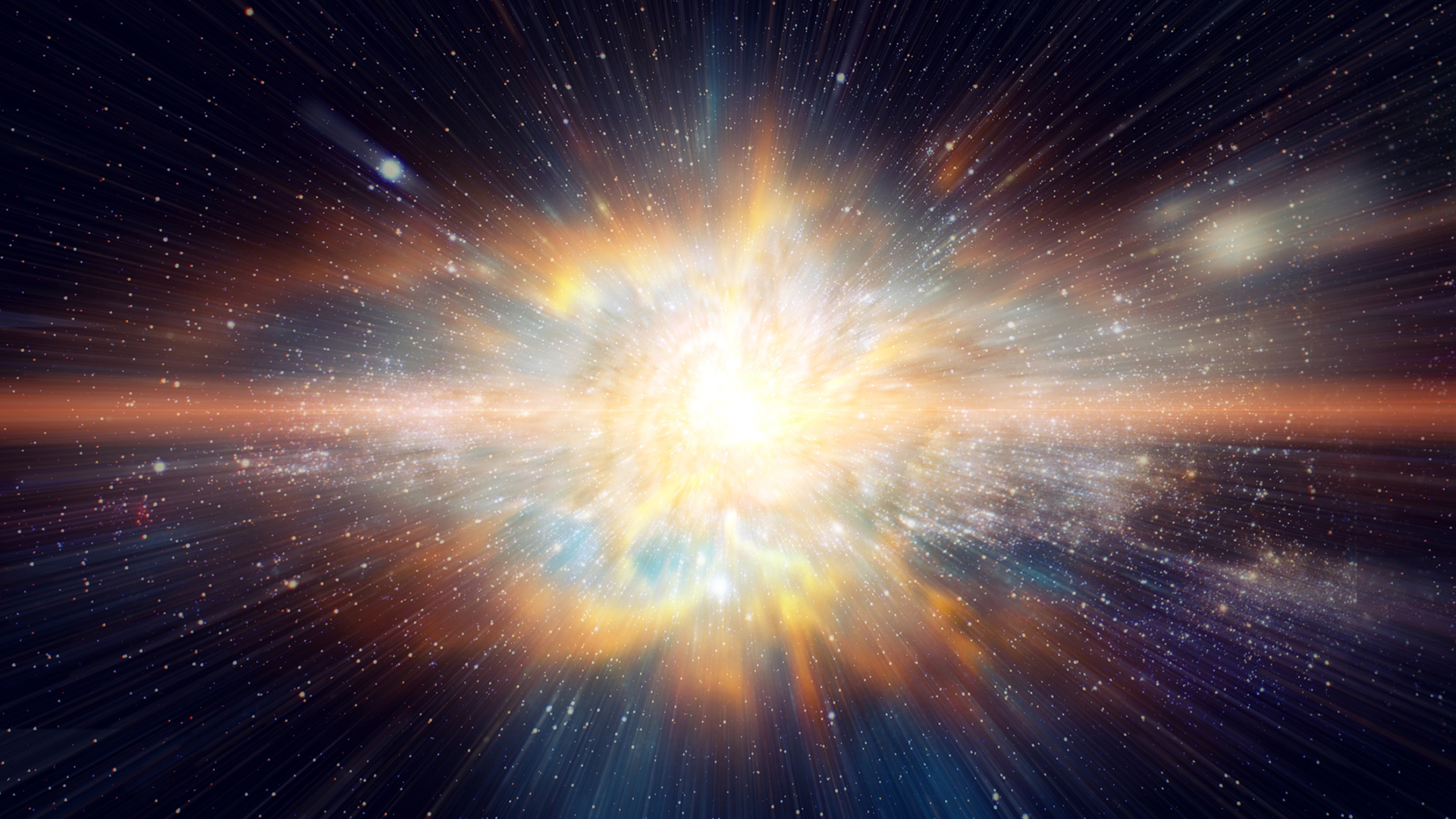
Cosmic Forces and the Dance of Galaxies
The universe is a stage of immense entities performing intricate dances governed by gravity, electromagnetism, and the fabric of space-time. These forces shape the formation and evolution of celestial bodies, offering a deeper understanding of cosmic interconnectedness.
Gravitational Waves and Einstein's Legacy
Gravity, the dominant force on cosmic scales, binds galaxies and clusters, and keeps planets in orbit. Predicted by Einstein's General Theory of Relativity, gravitational waves are ripples in space-time caused by accelerating massive objects. The historic detection of GW170817 by LIGO—a multimessenger merger of neutron stars—confirmed these waves as a new observational tool. Researchers at MIT and the LIGO Laboratory continue to analyze these signals, revealing insights into cosmic mergers and the dynamics of the universe.
Electromagnetic Forces in Cosmic Evolution
While gravity dominates, electromagnetic forces may play a larger role than previously thought. Plasma cosmology suggests that ionized matter and large-scale electromagnetic currents could influence galactic structure, challenging the gravity-centric model. These alternative theories encourage rigorous testing of established cosmology, ensuring a comprehensive understanding of the universe's evolution.
Stellar Lifecycles and Elemental Creation
Stars are not mere points of light; they are crucibles that forge elements through nuclear fusion. Their lifecycles—from formation in nebulae to explosive supernovae—drive the chemical enrichment of the cosmos and shape galaxies.
Nucleosynthesis in Stellar Furnaces
Stars convert hydrogen into heavier elements via fusion, with massive stars culminating in supernovae that scatter carbon, oxygen, iron, and other elements into space. This nucleosynthesis enriches the interstellar medium, providing the raw materials for new stars and planetary systems. Each generation of stars carries forward the chemical legacy of its predecessors, weaving a unified thread across time.
Stellar Feedback and Galactic Evolution
Stars actively shape their environments through radiation and supernova explosions. Young stars ionize surrounding gas, triggering further star formation, while supernovae can clear gas clouds, regulating the cycle of creation and destruction. This feedback influences galactic morphology and evolution, helping us understand how galaxies formed from the early universe to the present.
The Space-Time Continuum and Cosmic Dynamics
The space-time continuum merges three spatial dimensions with time into a four-dimensional fabric. It is not static but dynamic, flexing under mass and energy to manifest as gravity. Understanding this continuum is key to addressing fundamental questions in cosmology.
Extra Dimensions and Unified Theories
Advanced theories propose extra dimensions beyond our perception, hinting at a more complex universe. These dimensions could help integrate gravity with quantum physics, leading to a unified theory that bridges micro and macro scales. The space-time continuum is central to this quest, offering a framework for understanding cosmic expansion, black holes, and the Big Bang.
Gravitational Wave Astronomy: A New Window
Detection of gravitational waves revolutionizes our ability to observe the universe. Instruments like LIGO capture the faint echoes of cataclysmic events, providing information about extreme environments inaccessible to traditional telescopes. These waves carry details about neutron star mergers, black hole collisions, and the nature of space-time itself. Continued innovations and collaborations among academic institutions worldwide are driving this field forward, uniting theory and observation.
The Big Bang and Universal Expansion
The Big Bang Theory posits that the universe began as an infinitely dense singularity roughly 13.8 billion years ago and has been expanding ever since. This framework explains the cosmic microwave background radiation and the abundance of light elements, forming the cornerstone of modern cosmology. Observations of distant galaxies moving away from us, coupled with General Relativity's description of dynamic space-time, support an expanding universe.
Implications for Modern Physics
The space-time continuum is fundamental to modern physics, influencing technologies like GPS and theories about the universe's structure. Gravitational waves offer tests of relativity and insights into cosmic events. By integrating research from institutions like MIT and LIGO, scientists continue to decode the most secretive processes of the cosmos, unifying our understanding of the micro and macro realms.