Quantum Computing Frontiers: Stability, Scalability, and Simulation Breakthroughs
Advances in quantum computing: topological qubits, error correction, scaling, and simulations set to transform science and industry.
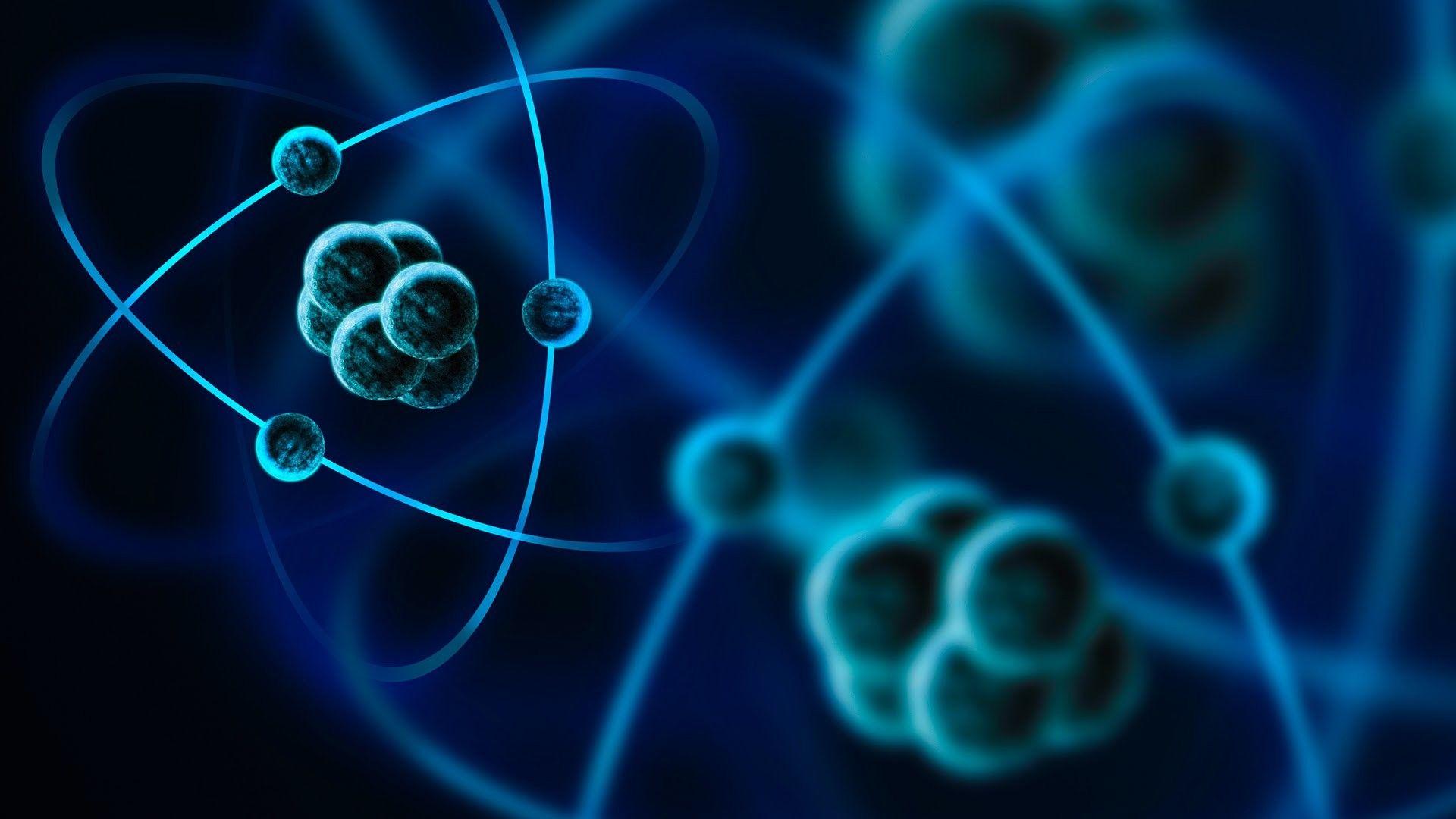
Scaling Up Quantum Processors
Qubit Quantity and Connectivity
Building powerful quantum systems depends on increasing both the number and quality of qubits. Researchers are advancing fabrication techniques to create qubits with longer coherence times and better connectivity. Cryogenic environments help maintain superposition states, enabling more complex computations. Improved inter-qubit interactions allow for sophisticated algorithms that exploit quantum parallelism, offering exponential speedups for specific tasks like factoring and optimization.
Control and Error Mitigation
As qubit counts grow, managing interactions becomes critical. Advanced algorithms orchestrate thousands of qubits while error correction protocols identify and fix mistakes in real time. Hybrid quantum-classical systems offload routine tasks to classical computers, enhancing overall reliability. These strategies bridge the gap between theoretical potential and practical quantum computing.
Stability in the Quantum Realm
Topological Qubits
The fragility of standard qubits poses a major challenge. Topological qubits encode information in the system's overall configuration rather than in individual particles, providing natural protection against environmental noise. This collective encoding acts like a fortified vault, preserving data integrity even under disturbances. Such robust qubits are essential for large-scale quantum computers capable of revolutionizing cryptography, drug discovery, and materials science.
Error Correction Strategies
Even with stable qubits, errors are inevitable. Modern error correction uses redundant encoding across multiple qubits, comparing their states to detect discrepancies without direct measurement—which itself can introduce errors. Real-time correction algorithms maintain computation integrity. These methods are vital for achieving fault-tolerant quantum computing.
Quantum Simulations: From Theory to Practice
Simulating Physical Systems
Quantum computers excel at simulating quantum phenomena, a task classical computers find extremely difficult. By using qubits to mimic molecular interactions, scientists can predict chemical reactions, discover new materials, and design drugs more efficiently. These simulations extend to energy and environmental science, enabling the development of better solar cells and carbon capture technologies.
Accelerating Innovation Cycles
Quantum simulations serve as virtual testbeds, allowing researchers to trial hypotheses before physical experiments. This reduces resource waste and speeds up discovery. For instance, in drug development, quantum simulations can rapidly identify promising compounds, cutting years off the R&D timeline. The integration of simulation with experimental research accelerates breakthroughs across multiple industries.
The Road Ahead
Interdisciplinary Collaboration
Quantum progress relies on expertise from physics, computer science, engineering, and ethics. Educational investments are needed to build a skilled workforce. Ethical considerations—privacy, security, equitable access—must guide deployment to ensure benefits reach all of society. As the field evolves, it will reshape our understanding of computation and reality itself.
| Chapter | Key Concepts | Description | Related Phenomena | Technological Implications |
|---|---|---|---|---|
| From Waves to Bits: How Quantum Innovation Reshapes Technology | Quantum Computing & Qubits | Overview of qubits as fundamental units using superposition and entanglement | Qubit coherence, quantum gates, algorithms | Quantum processors, complex system simulation |
Data source: United States Department of Energy Office of Science, January 2024
Quantum technology is not just a computational leap—it is a journey into the heart of physics, promising to unlock new knowledge and solve humanity's grand challenges.