Evolution's Mechanisms: Natural Selection, Genetic Drift, and Speciation in Action
Explore how natural selection, genetic drift, and speciation drive life's diversity through fossils, DNA, and modern experiments.
The Forces Behind Life's Diversity
Evolution is not a single process but a dynamic interplay of several mechanisms that together shape the rich tapestry of life on Earth. Natural selection, genetic drift, and speciation each contribute to how species arise, adapt, and sometimes vanish. Understanding these forces reveals both the predictable and random elements that have crafted the biological world around us.
Natural Selection: Adaptation Through Survival
Natural selection acts as a filter, allowing individuals with traits best suited to their environment to survive and reproduce more successfully. Over generations, these advantageous traits become more common. A classic example is beetle coloration: beetles that blend into their surroundings evade predators, while those that stand out are more likely to be eaten. Over time, the population shifts toward better-camouflaged individuals, illustrating how environmental pressures drive adaptation with remarkable precision.
Genetic Drift: Random Changes in Small Populations
Unlike natural selection, genetic drift is a random process that can cause large shifts in allele frequencies, especially in small populations. A chance event—such as a storm wiping out a subset of a plant population—may eliminate certain traits regardless of their usefulness. For instance, if a flood destroys most red-flowered plants in a mixed population, the surviving yellow-flowered ones will dominate purely by luck. This randomness underscores evolution's unpredictability, showing that not all change is adaptive.
Speciation: The Splitting of Lineages
New species often arise when populations become isolated—geographically or reproductively. A landmass splitting or a river forming can separate groups, exposing them to different selective pressures. One group might evolve thicker fur in a colder climate, while another develops new defenses against local predators. Over time, these accumulated differences can make interbreeding impossible, even if the groups reunite. This process, called speciation, is a primary driver of biodiversity.
Evidence from the Past: Fossils and DNA
Evolutionary history is recorded in two complementary archives: fossils, which preserve physical remains, and DNA, which carries genetic instructions. Together, they offer a comprehensive view of life's transformations.
Fossil Snapshots of Ancient Life
Fossils provide tangible evidence of organisms that lived millions of years ago, revealing their morphology, ecology, and behavior. Transitional fossils, such as those showing the shift from land mammals to whales, fill in gaps in evolutionary timelines. By studying these preserved remains, scientists reconstruct the sequence of changes that led to modern species.
The Genetic Record: Molecules Reveal History
While fossils show external forms, DNA uncovers the molecular underpinnings of evolution. Comparing genetic sequences across species allows researchers to build evolutionary trees that show common ancestry. Ancient proteins, more stable than DNA, serve as molecular fossils, giving insights into extinct species' biology. Additionally, some organisms have streamlined their genomes, shedding non-essential genes to survive in specific niches—a reminder that evolution does not always increase complexity.
Evolution in Real Time: Modern Observations
Today's technology lets us witness evolution as it happens, both in the lab and in the wild.
Ancient DNA: Reconstructing Extinct Genomes
Advances in DNA sequencing allow scientists to extract and analyze genetic material from ancient remains. By reconstructing the genomes of long-extinct species, researchers can infer their lifestyles, relationships, and evolutionary trajectories. This technique has revolutionized our understanding of species like Neanderthals and woolly mammoths.
Laboratory and Field Studies
Experiments with bacteria, fruit flies, and other fast-reproducing organisms demonstrate natural selection in action over weeks or months. For example, bacteria exposed to antibiotics quickly evolve resistance if a few individuals carry protective mutations. Long-term ecological studies, such as tracking Darwin's finches in the Galápagos, document how populations adapt to changing environments over decades.
Gene Editing as a Tool for Study
CRISPR and other gene-editing technologies allow scientists to introduce specific genetic changes and observe their effects. This direct manipulation helps test evolutionary hypotheses, revealing how particular alterations influence an organism's survival and reproduction. Such tools illuminate the subtle molecular steps that underlie adaptation and diversity.
Weaving It All Together: The Tree of Life
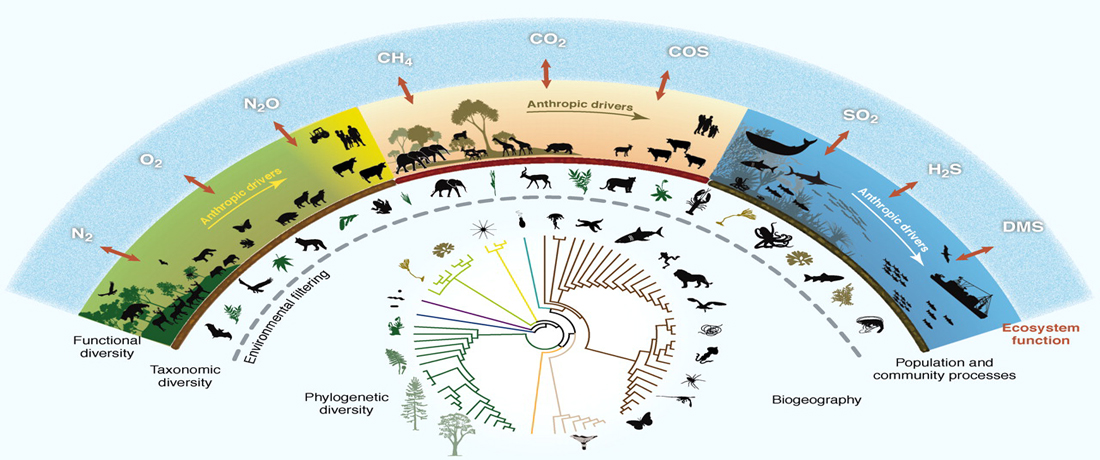
Combining fossil evidence with genetic data reshapes our understanding of evolutionary relationships. Phylogenetic trees, constructed from DNA comparisons, often reveal unexpected connections—such as the close kinship between birds and dinosaurs. These integrated approaches show that evolution is a continuous process of innovation, with each lineage experimenting with new forms and functions. The result is a resilient, interconnected web of life that constantly adapts to Earth's ever-changing conditions.
From random drift to precise selection, from ancient bones to modern genomes, the story of evolution is one of endless discovery. By tracing these diverse threads, we gain a deeper appreciation for the profound forces that have shaped—and continue to shape—all living things.